[ INQUIRY: FACE / SYSTEM / CONTROL ]

What counts as
a face?

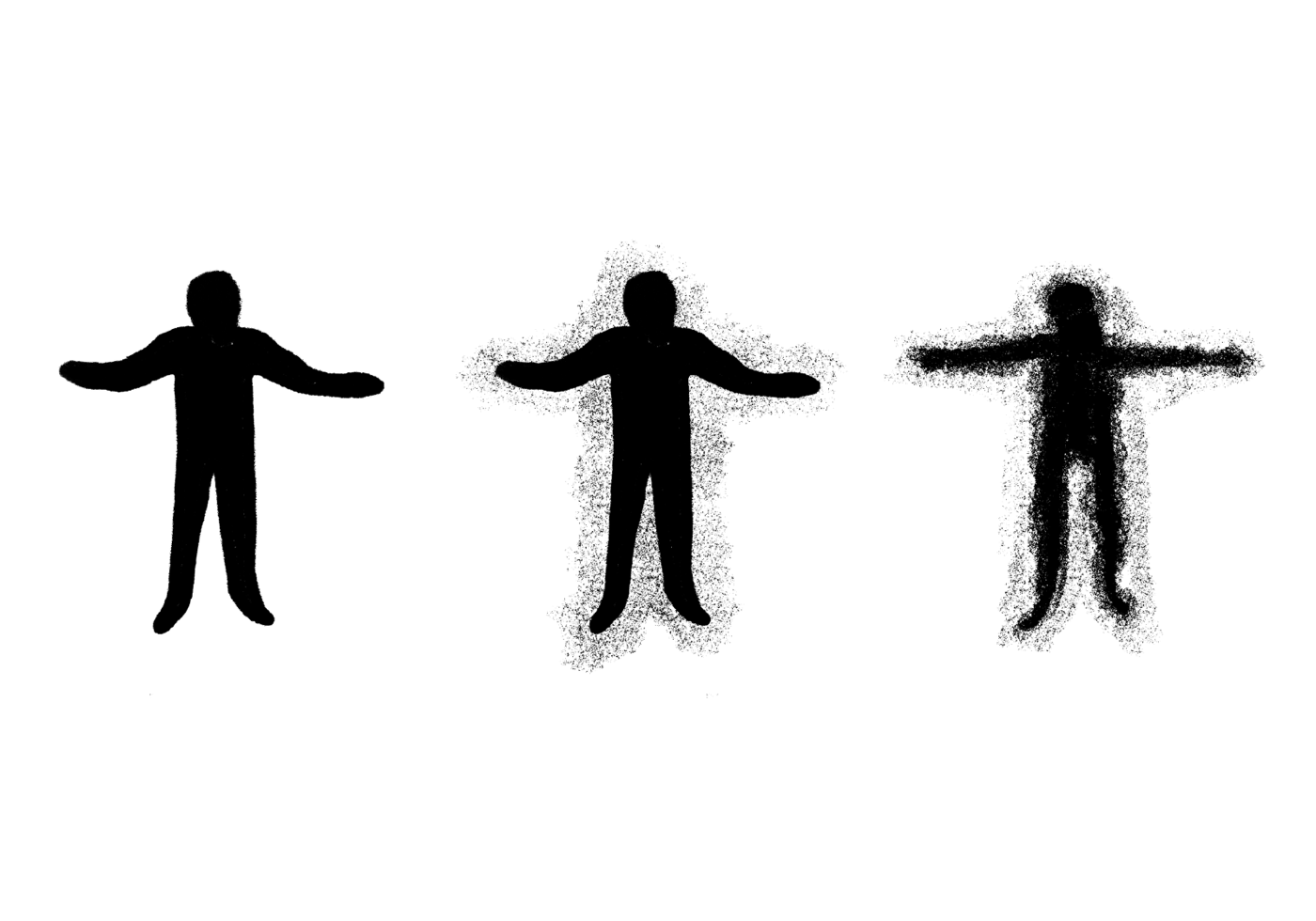
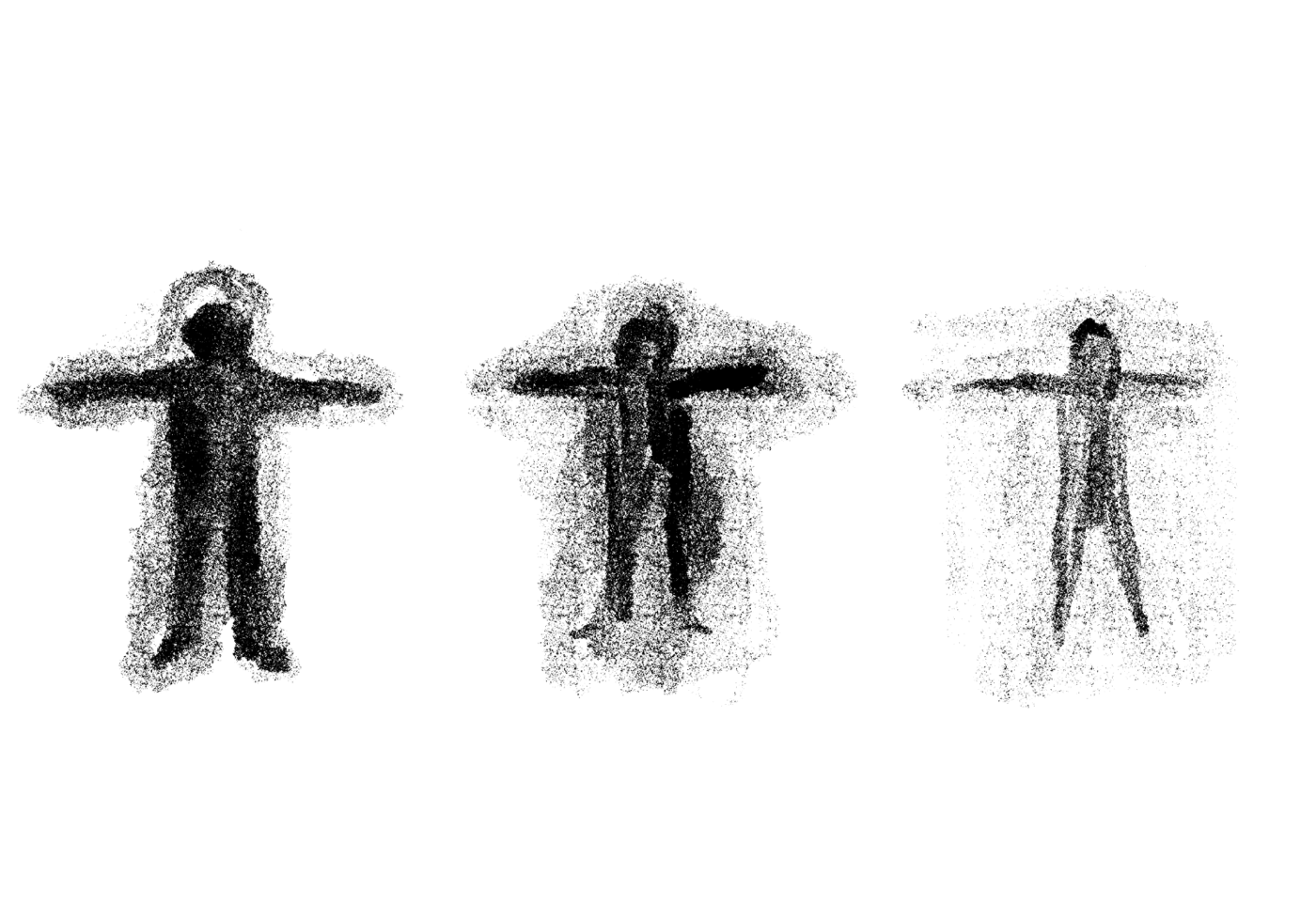
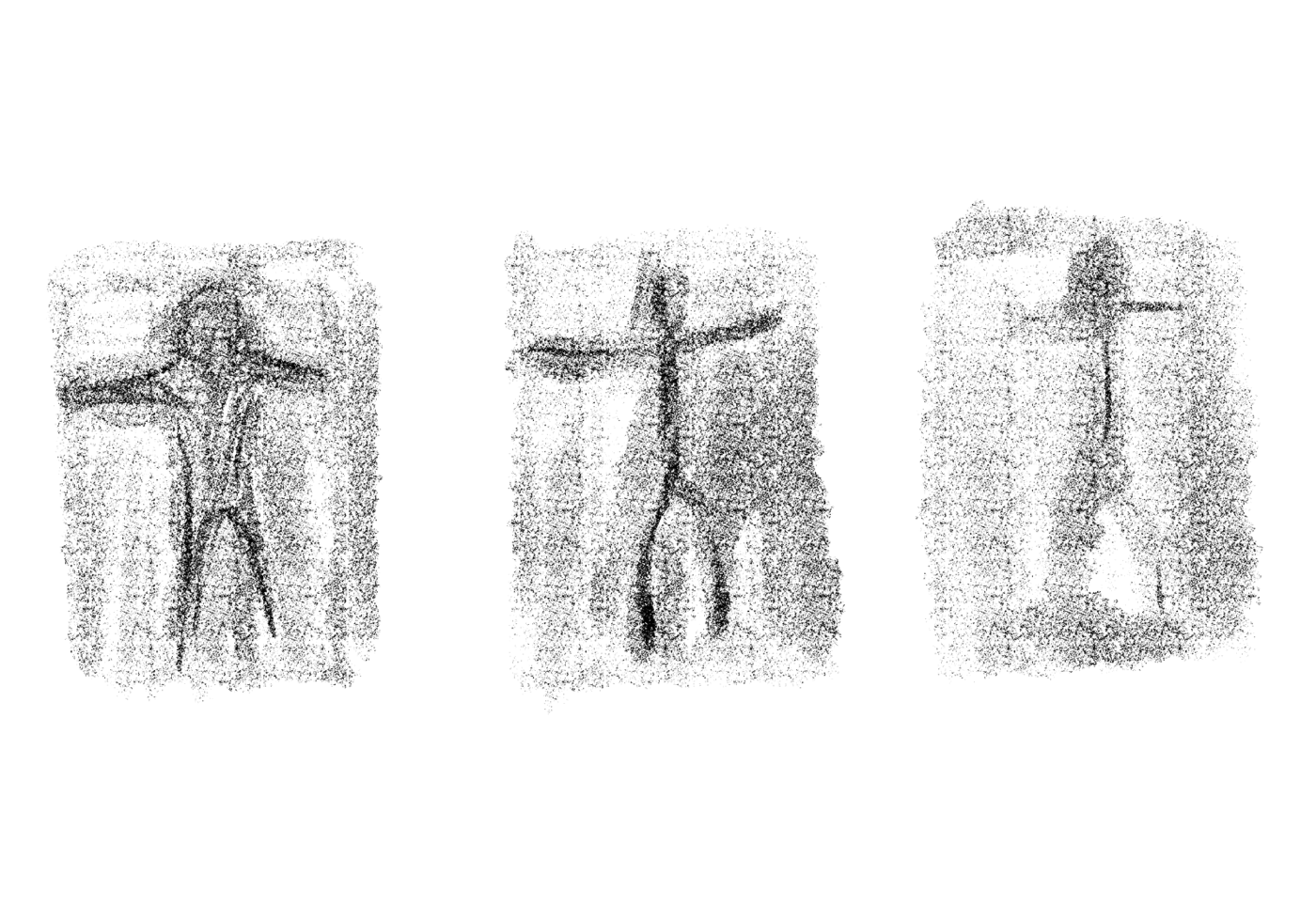
From presence → to computation → to system control

LAT: 28.6139° N
TIMESTAMP:
REF: FACE.PROC.V1
STATUS: ACTIVE
SCROLL
Before Everything
IMG_02 // PRESENCE
[ SECTION 02 // PHILOSOPHY ]

Before everything

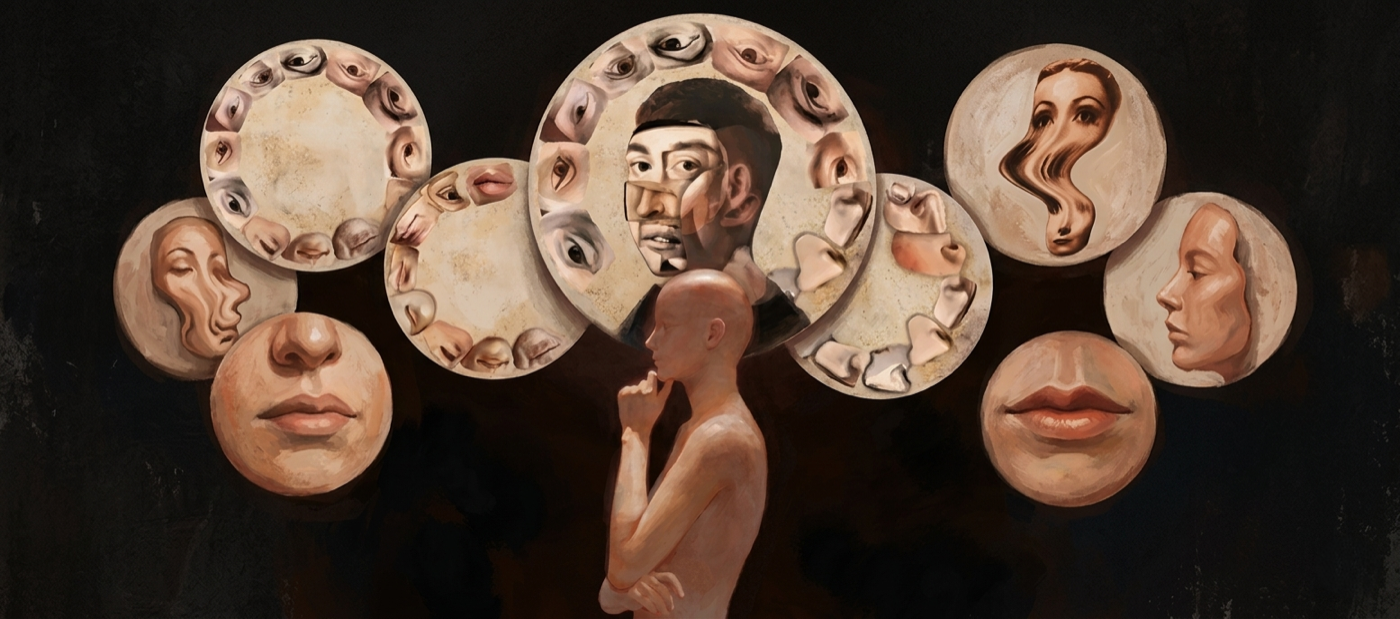
For a long time, the face was not a device. It was simply how another person appeared to us. From a face we sensed emotion and intention — joy, anger, shame, trust, deceit.


Emmanuel Levinas gave this a name. The encounter with a face carries an ethical force. A face quietly tells us that this other person matters and cannot simply be reduced to an object or a number.


Seeing a face means we are already involved with someone, in a way that cannot be fully captured by lists, scores, or measurements.


The face speaks. The manifestation of the face is already discourse.

LEVINAS // TOTALITY AND INFINITY
[ SECTION 03 // COGNITION ]

Two circles
and a curve

The face before language —
what a two-year-old knows
without being taught

THE MINIMUM VIABLE FACE

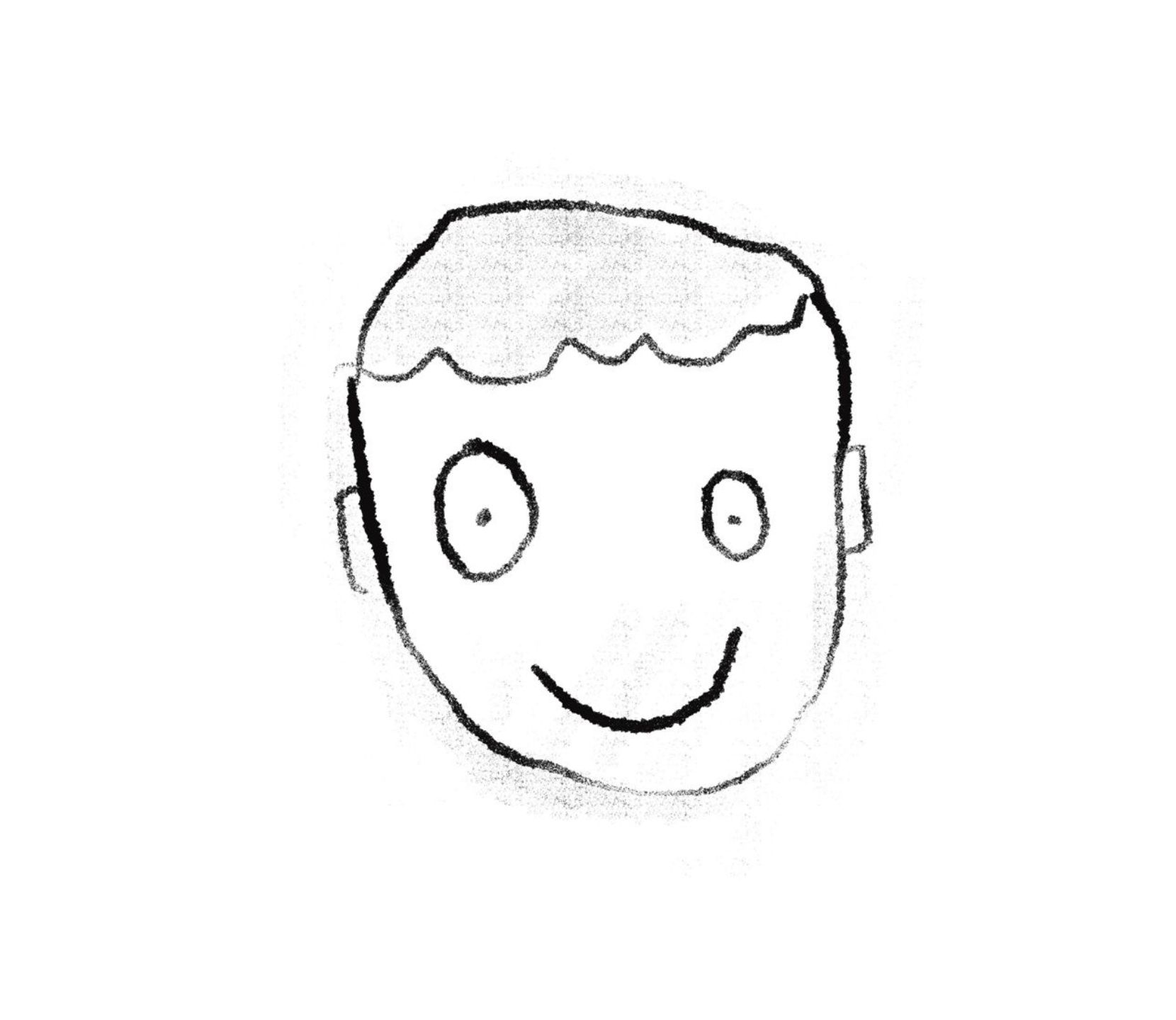
A two-year-old draws a face with eyes and a smile — no nose, ears, or depth. This isn't a lack of skill; it shows what matters. The child isn't depicting anatomy, but a social signal: eyes that meet a gaze, a smile that signals safety.


The first figures that our eyes can see as infants are other human faces. While most of the world stays blurry for months, human faces are always crisp.

DEVELOPMENTAL COGNITION // SOCIAL SIGNAL
Two circles and a curve
IMG_03 // COGNITION
[ SECTION 04 // ANCIENT WORLD ]

Ancient world

The face as spirit, symbol, and power
Before likeness — the face represents, it does not depict

01
[ SPIRIT ]
The oldest face images aren't portraits — they're signs
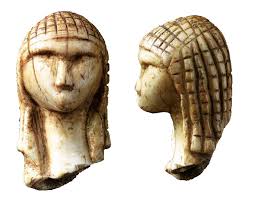
The Venus of Brassempouy (25,000 years ago) shows eyes and a nose but no mouth: not a likeness, but a presence.
Ancient 1
02
[ SYMBOL ]
Egyptian art — identity over resemblance
Egyptian art uses a frontal eye on a profile head — anatomically impossible, yet clear in meaning. Faces aren't shown as seen, but as known; identity matters more than resemblance.
Ancient 2
03
[ INDIVIDUAL ]
Fayum mummy portraits — the start of portraiture
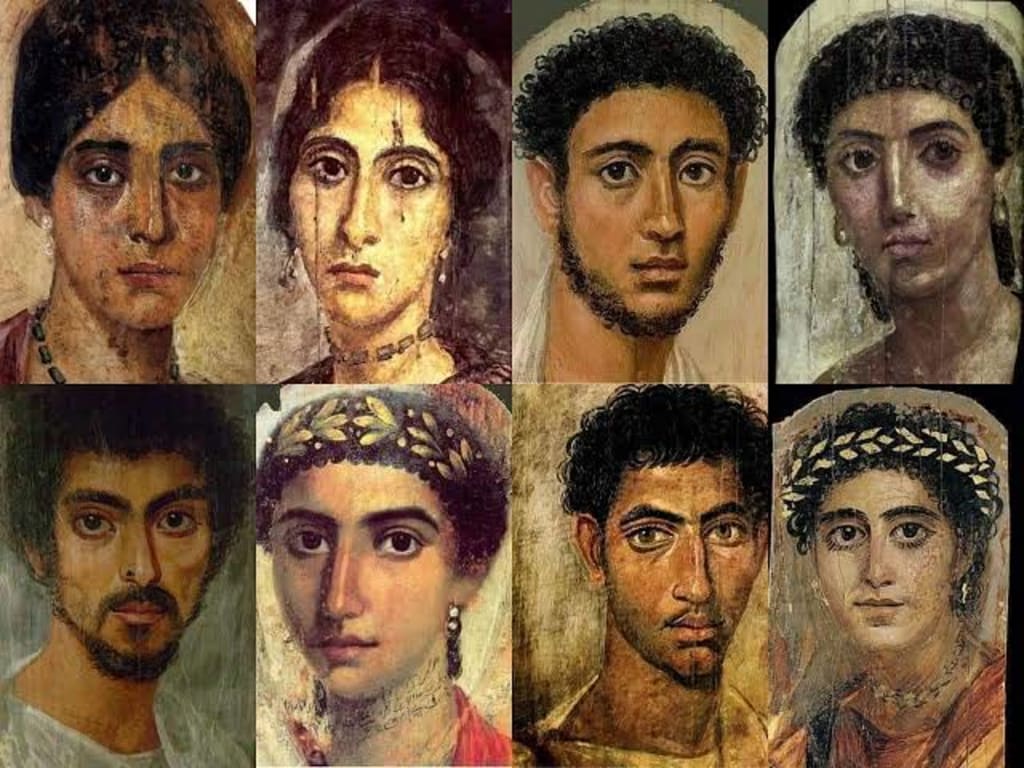
The Fayum mummy portraits (1st–3rd century CE) mark a shift. Painted for the dead, they aim to capture a specific person — not a type or symbol. Here begins the move from symbol to individual — the start of portraiture.
Ancient 3
[ SECTION 05 // RENAISSANCE ]

The portrait
is born

Depth discovered — the face enters space
Before likeness — the face inhabits dimension, not symbol

01
[ PERSPECTIVE ]
Brunelleschi places the face in space
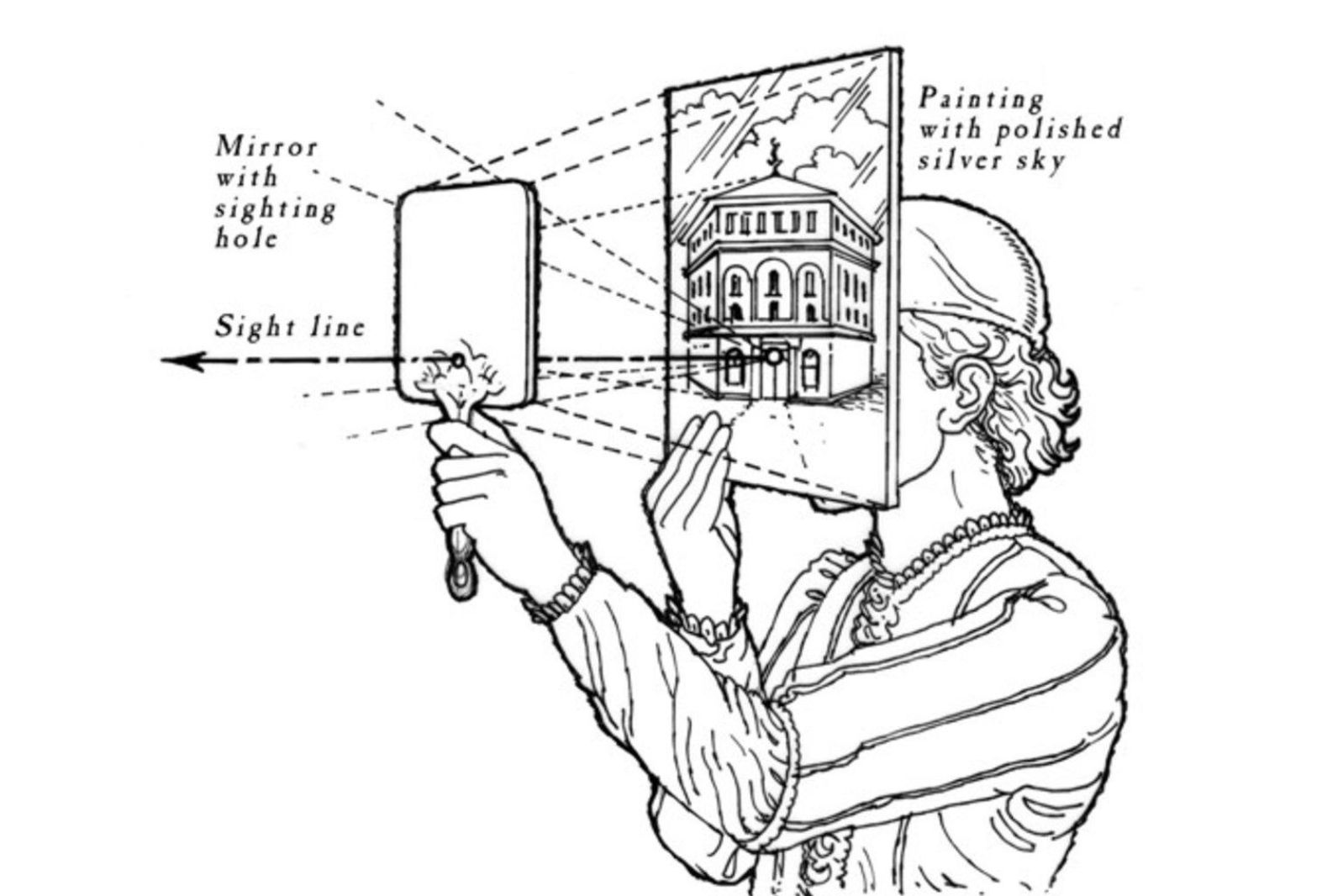
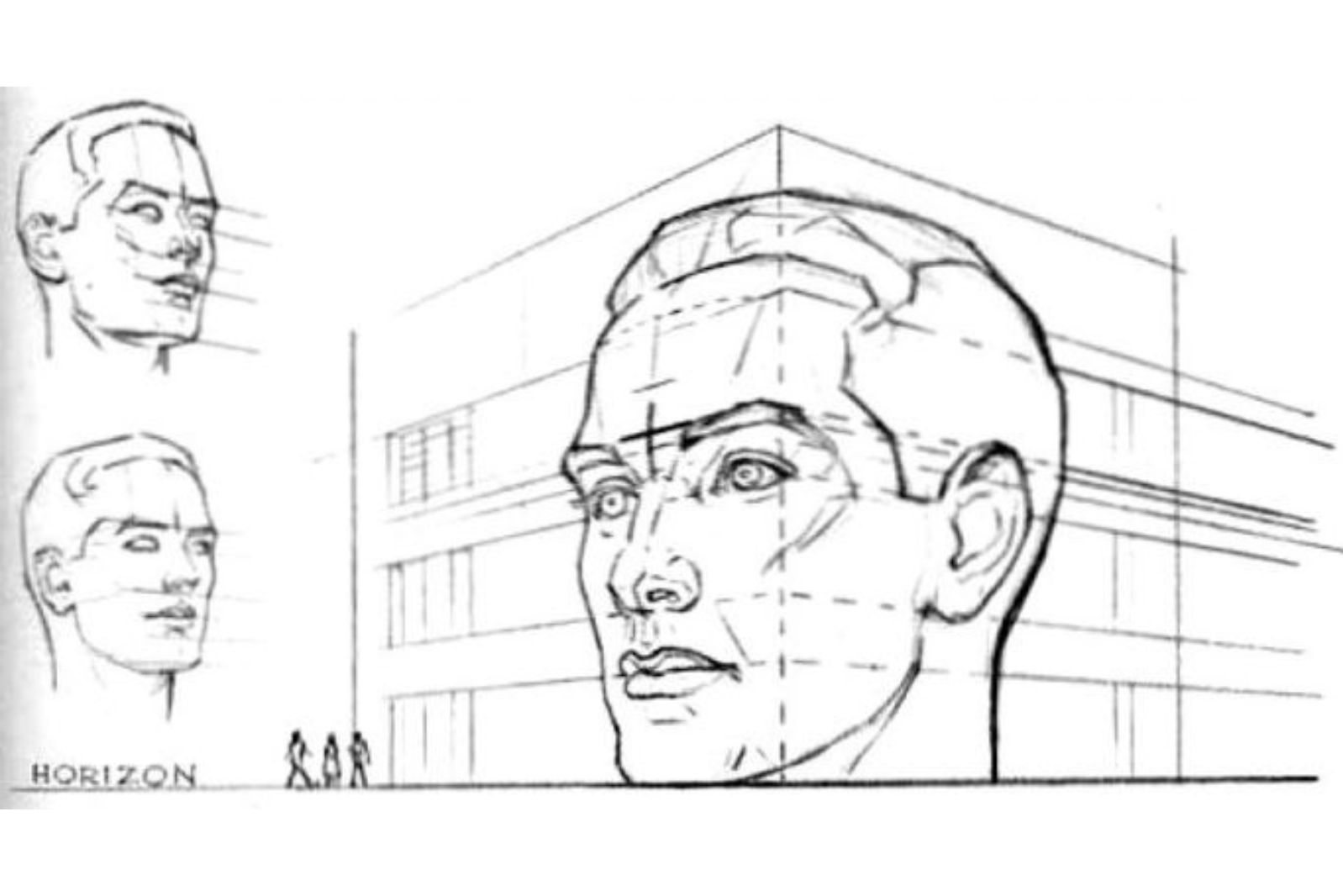
In 1420, Brunelleschi introduced linear perspective — placing the face within space through recession, foreshortening, and light shaping the planes of the cheek.
Linear Perspective
02
[ PERSPECTIVE ]
Brunelleschi places the face in space
In 1420, Brunelleschi introduced linear perspective — placing the face within space through recession, foreshortening, and light shaping the planes of the cheek.
Sfumato
03
[ SFUMATO ]
Leonardo dissolves the edge
Leonardo's sfumato dissolved the face's edges into atmosphere, blurring where it ends and air begins. The face becomes part of the world — a volume, not a symbol.
Volume
04
[ VOLUME ]
The face as three-dimensional form
Painters studied how light wraps bone — cheekbone, brow ridge, orbital socket — turning the face into a map of depth. From flat symbol to inhabited volume.
Depth
05
[ DEPTH ]
Depth implies an interior life
A face placed in a landscape or interior now implied psychological depth — the portrait became a claim to individual existence and social standing.
Atmosphere
[ SECTION 06 // PHOTOGRAPHY & POWER ]

The face fixed

The face becomes an indexical record
Photography claimed objectivity — and turned the face into evidence

Photo 1
01
[ RECORD ]
1879: The face becomes evidence
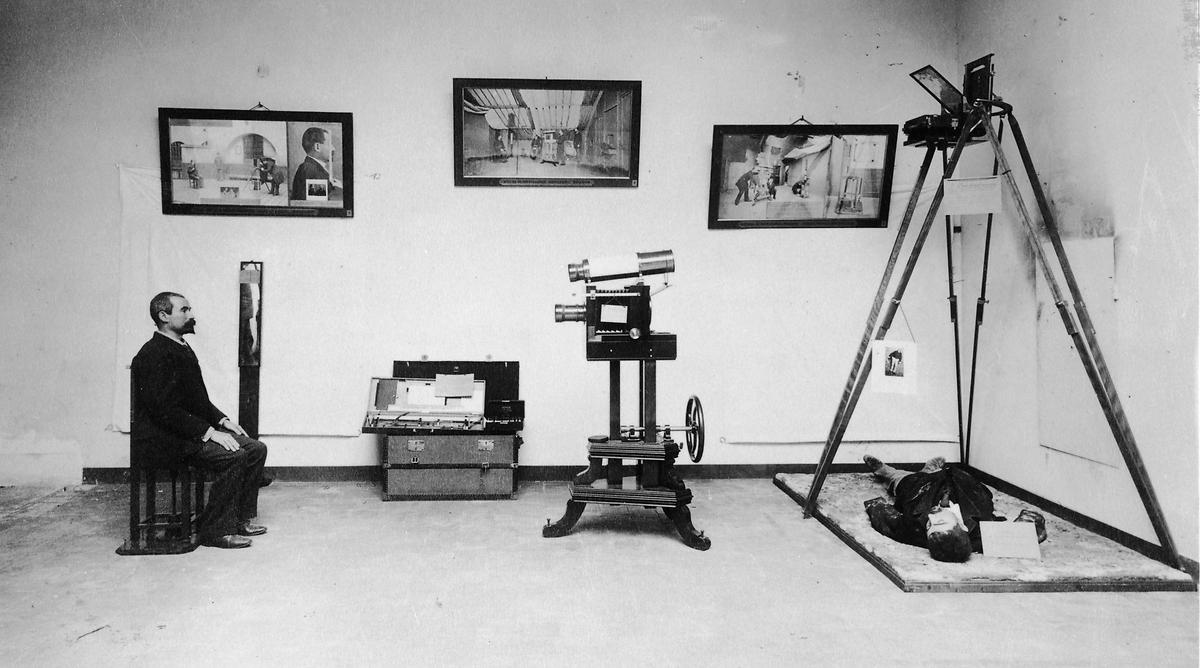
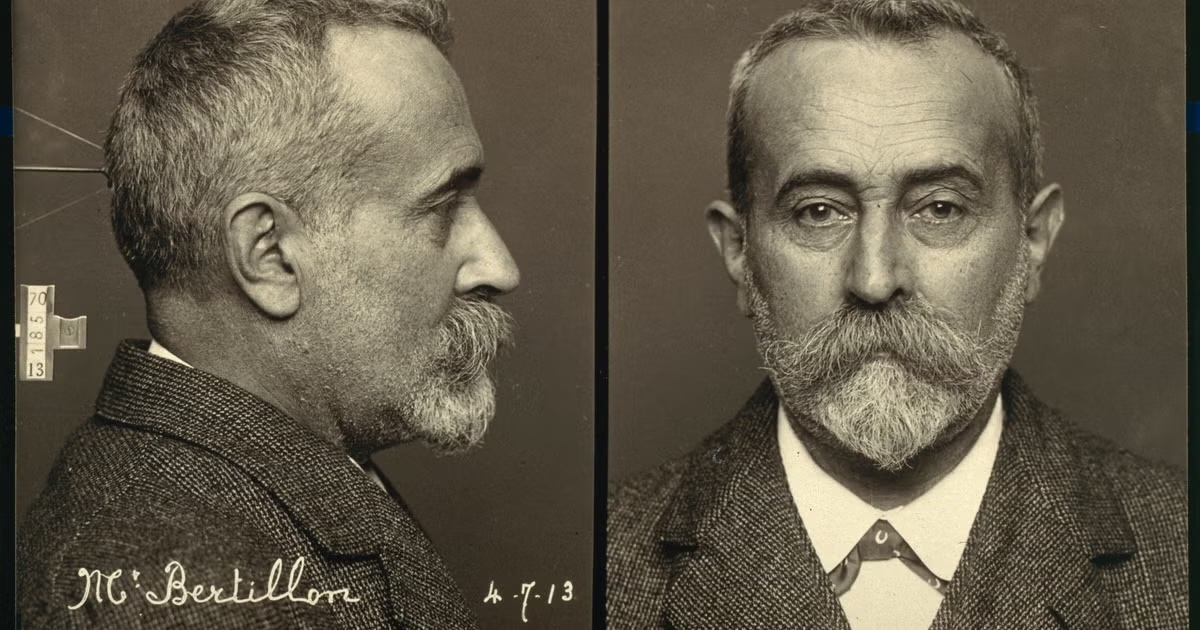
Before photography, likeness depended on painters — and painters interpreted. After 1839, it was captured, not constructed. In 1879, Alphonse Bertillon introduced anthropometry: measuring faces as criminal evidence. Mugshots were standardised — front and profile, ears visible, expression neutral. The face is fixed; it becomes a record.
Photo 2
02
[ CLASSIFIED ]
The faciality machine
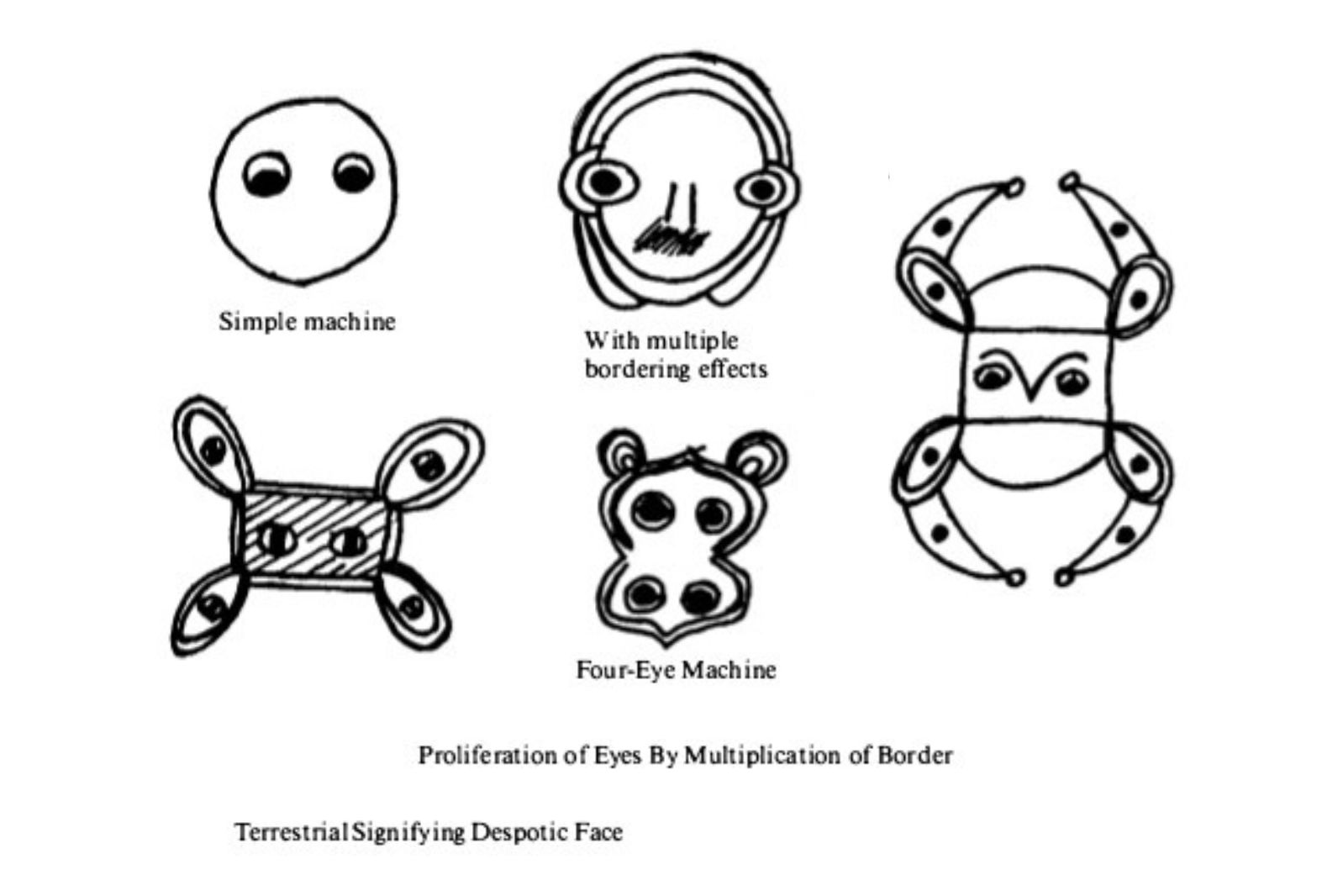
Colonial science used the same tools to classify populations, fixing faces into typologies. Deleuze and Guattari call this the faciality machine: one face becomes the norm, others marked deviant, dangerous, or invisible. The face turns into a surface for organising populations — who moves freely, who is watched, who can be made faceless in law and institutions. The face becomes political. It doesn't disappear — it intensifies.
Photo 3
03
[ SYSTEM ]
It doesn't disappear — it intensifies
The face turns into a surface for organising populations — who moves freely, who is watched, who can be made faceless in law and institutions. The face becomes political. It doesn't disappear — it intensifies.
Face computation
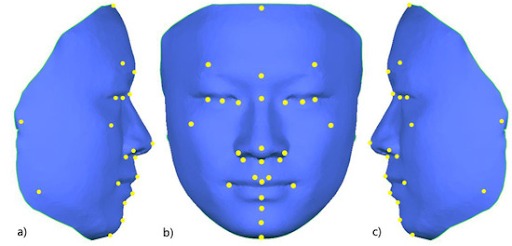
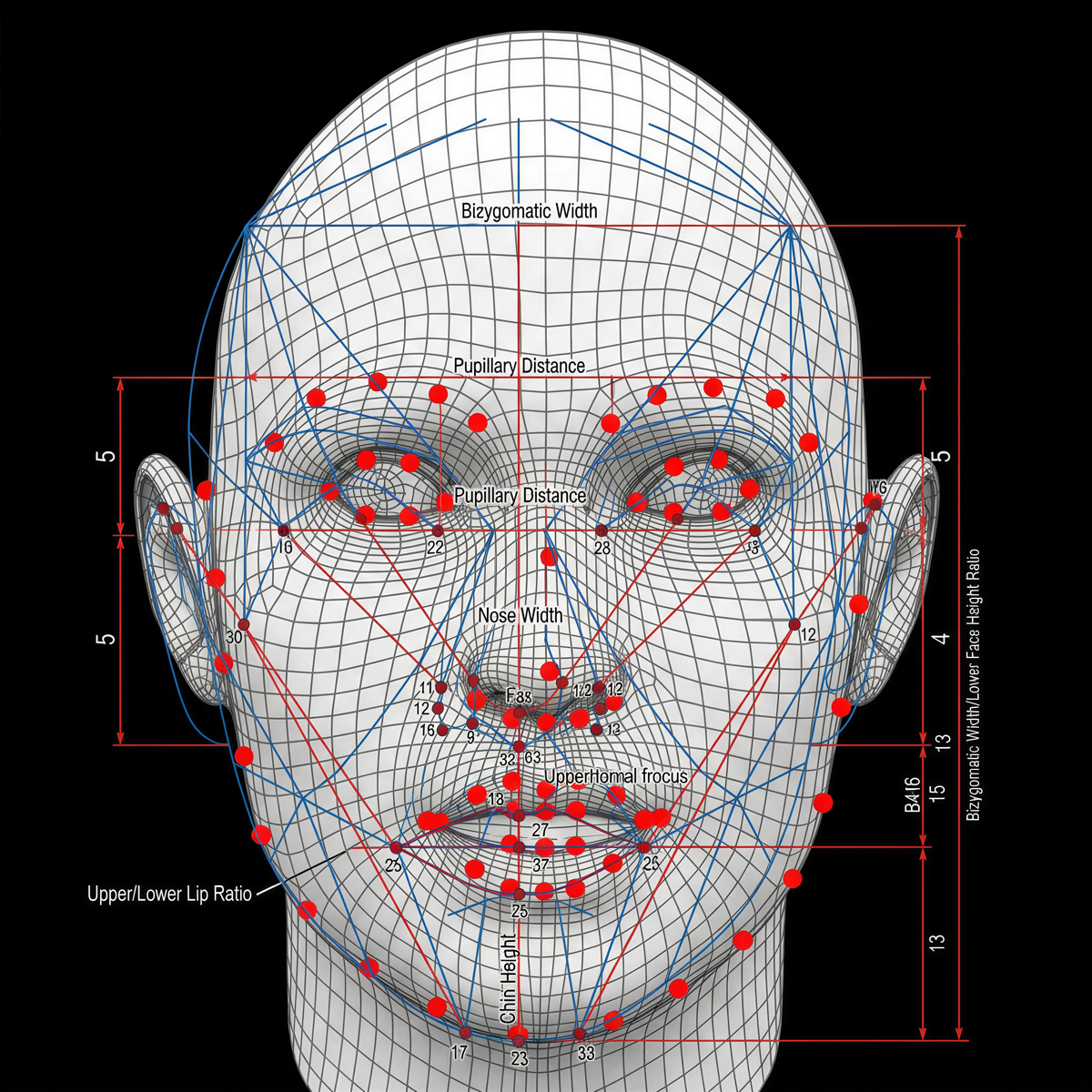
68 LANDMARKS DETECTED

The face as
geometry

68 landmarks — the face reduced to coordinates

By the 1990s, algorithms could detect 68 facial landmarks — the eye corners, nose tip, lip edges. Each point becomes an (x, y) coordinate. Distances turn into ratios; ratios into vectors.


Stored, searched, and matched across vast databases, the face is no longer a continuous image — it becomes a faceprint. The face has been rebuilt as a computational object. And it is still accelerating.

INPUT→FACE (IMAGE)
PROCESS→68 LANDMARK DETECTION
OUTPUT→FACEPRINT (VECTOR)
STATE→SYSTEM CONTROL
[ SECTION 08 // CONDUCT LEDGER ]

The face as anchor point

Face anchor — presence Face anchor — entry point Face anchor — accountable Face anchor — ungovernable
01 / 04

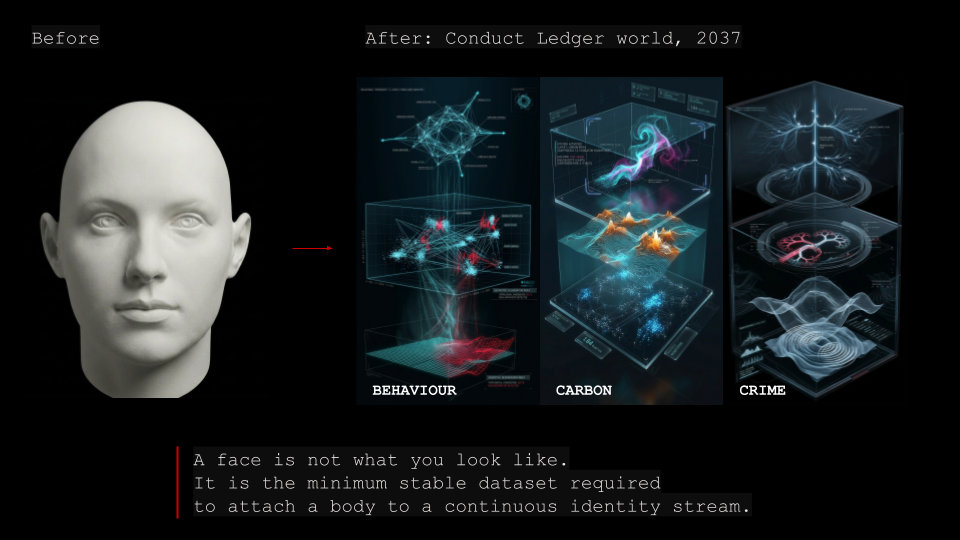
In 2037, a face isn't what you look like.

It's the entry point through which the Conduct Ledger attaches your entire record to your moving body. It is the anchor. Everything the system knows — carbon output, behavioural predictability, crime-risk — floats until a face locks it to you. To have a face is to be accountable. To lose one is to become ungovernable.

The face moves
from presence
Political surface
Computational
template
System anchor

A face is not what you look like.

A face is the minimum stable dataset required to attach a person to a continuous identity stream.

[ SECTION 10 // CONDUCT LEDGER ]

The face as anchor point

Layers of the face used to map
the three streams

01 Geometric
—
02 Surface
—
03 Temporal
LAYER 1

GEOMETRIC
FACE

System role:
gives structural stability
base identity anchor
Bone structure
Depth map
Spatial landmarks
Bone geometry is immutable. This layer anchors the subject's identity even under surface-level spoofing — cosmetics, scarring, aging, or surgical alteration. Hash verified against National Cranial Registry. Cannot be altered without forensic flag.
Bone structure
Zygomatic width ratio1.347
Orbital depth index0.821
Mandibular angle118.4°
Cranial vault profileType II-C
Topology hashSKT-7F3A-9012
Layer confidence92.4%
Depth map
Forehead plane offset+2.1 mm
Cheek prominence deltaL+4.3 / R+3.9
Nasal projection22.7 mm
Depth map resolution0.04 mm/px
Asymmetry coefficient0.063 ⚑
Matrix resolution512 × 512
Spatial landmarks
Spatial landmarks
Landmark count68 / 68
Eye corner vectors[0.44, 0.31]
Lip edge midpoint[0.50, 0.73]
Faceprint vector dim.128-D
Database match score99.1%
Identity statusConfirmed
LAYER 2

SURFACE
FACE

System role:
confirms biological authenticity
prevents spoofing
Pore patterns
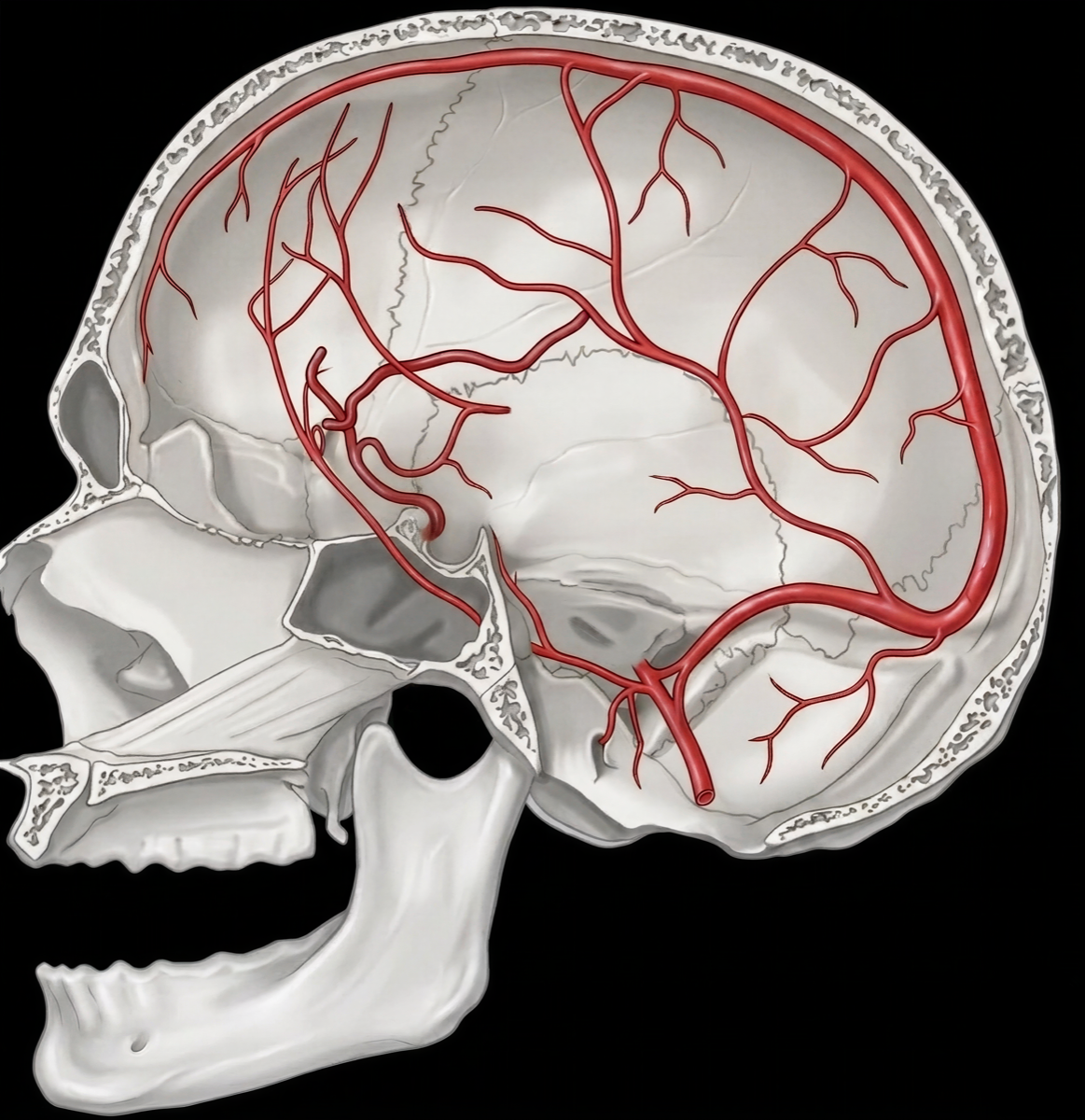
Vascular mapping
Thermal signature
Entropy above minimum liveness threshold (H > 4.2). Pore irregularity is characteristic of biological tissue, not synthetic substrate. 3D-printed masks score H < 2.1 on this measure. Subject is not using a physical spoofing device.
Pore patterns
Entropy score (H)4.81 bits
Pore density avg.312 / cm²
Texture gradient0.78
Mask detection score0.02
Synthetic skin flagClear
Liveness verdictConfirmed biological
Vascular mapping
Vascular mapping
Vein graph hashVG-A91C-3340
Branch count247 nodes
Temporal artery pathType B-right
Near-infrared match98.3%
Circulatory anomaliesNone detected
Layer confidence87.6%
Thermal signature
Facial temp. baseline34.8°C
Current surface temp.36.2°C
Delta from baseline+1.4°C ⚑
Periorbital flushElevated ⚑
Nasal thermoregulationNormal
Stress inferenceModerate (0.61) ⚑
LAYER 3

TEMPORAL
FACE

System role:
ensures continuity over time
detects anomalies
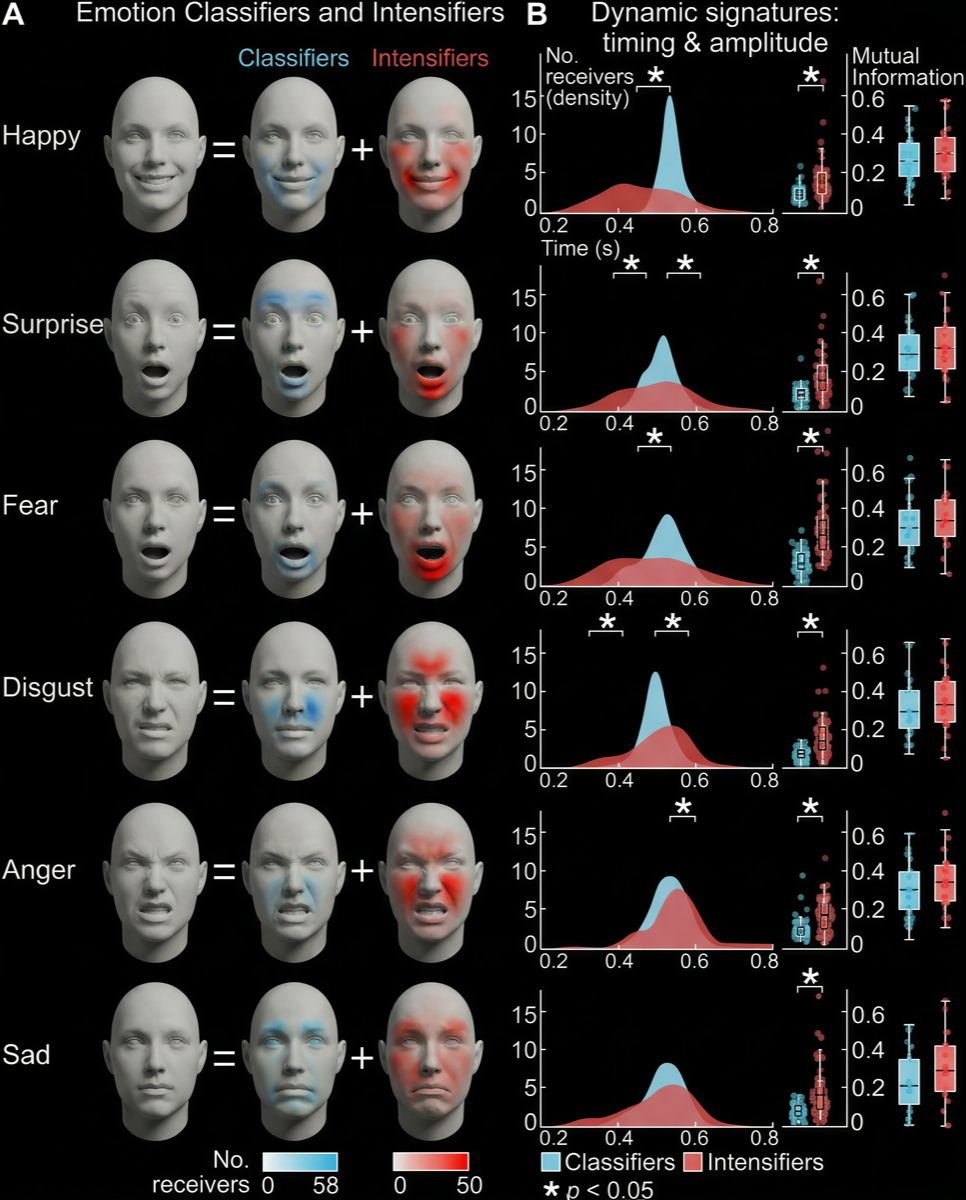
Micro-expressions
Facial muscle shifts
Eye movement
Micro-expressions occur below conscious control threshold (under 50 ms). Fast onset velocity combined with partial suppression indicates subject is masking an emotional state. Time-series logged to behavioural continuity file. Suppression itself is the signal.
Micro-expressions
Micro-expressions
Capture rate48 frames / sec
Detection window40 ms
AU-1 inner brow raiseActive ⚑
AU-4 brow lowererActive ⚑
Expression onset velocity38 ms (fast) ⚑
Suppression detectedYes — partial ⚑
Facial muscle shifts
Muscle shift baseline34 scans (7 yr)
Predicted age range31–36 yrs
Trajectory match94.1%
Unregistered interventionNone detected
Continuity statusConfirmed same person
Layer confidence71.2%
Eye movement
Gaze fixation point–12.4° left
Saccade frequency4.2 / sec ⚑
Blink rate22 / min ⚑
Pupil dilation delta+0.8 mm ⚑
Gaze vector continuityInterrupted
Anomaly classificationEvasive pattern 3B ⚑
So what is a face for the system?

THE ABSTRACTION
OF ANATOMY

The face no longer functions as appearance.
By 2037, its physical form is only the outer shell of a deeper computational structure.

Geometry, skin, and expression are not interpreted as human features,
but translated into measurable signals.

To the system, the face is merely a topological surface hosting data streams.
Every layer of the face is decomposed into coordinates, frequencies, vectors, and probabilities.

The system does not ask:
Who is this person?
It asks:
Can this body be stabilised as a continuous identity?

The Conduct Ledger reads the physical face to extract your three core variables:

LAYER 1 — THE CARBON MESH
Resource & efficiency tracking · the body as combustion engine
Layer confidence: 88.41%
1.1 — Thermal topography
Heat dispersion · metabolic calorie expenditure
Core Δ +2.3°C · 1,847 kcal/day
Core surface temp.36.8°C
Nasal tip temp.31.2°C
Core-extremity delta+5.9°C
Estimated kcal/day1,847
State resource alloc.B-tier (elevated) ⚑
The system sees a glowing heat map. Temperature differential calculates real-time metabolic expenditure. Warmth is a liability.
1.2 — Lipid reflectance
Sebaceous mapping · biological discipline index
BDI: 0.61 ⚑
Sebum density412 µg/cm²
Reflectance index0.73
T-zone light scatterElevated ⚑
Stress-lipid corr.0.68 ⚑
Biological discipline idx0.61 / 1.00 ⚑
The system maps the microscopic oil layer on skin. BDI 0.61 falls below threshold 0.75. It reads this as self-governance failure.
1.3 — Exhalation volumetrics
The CO₂ plume · cardiovascular effort · environmental impact
CO₂: 4.8 L/min · impact class C
Exhalation volume4.8 L / min
CO₂ concentration3.8%
Plume velocity0.42 m/s
Cardiovascular effortElevated ⚑
Daily CO₂ projection312 g / day ⚑
Environmental impactClass C (above quota)
The system tracks the invisible CO₂ cloud leaving the respiratory tract. Daily projection exceeds biological quota by 14g. Breathing above your quota is a ledger event.
Layer confidence88.41%
Active flags3 ⚑
Carbon ledger updateTier B– → C+
LAYER 2 — THE BEHAVIORAL TOPOGRAPHY
Compliance & predictability · face as mechanical apparatus
Layer confidence: 79.07%
2.1 — Micro-muscular vector rig
Tension vectors · latent aggression index
Masseter: 4.2 N ⚑
Zygomatic vector1.8 N (neutral)
Masseter clench force4.2 N ⚑
Corrugator supercilii3.1 N (elevated) ⚑
Orbicularis oculi0.9 N (nominal)
Vector return-to-neutral340 ms (slow) ⚑
Latent aggression index0.57 / 1.00 ⚑
The system sees a web of tension vectors. Masseter > 3.5 N triggers aggression index. The system does not care why you are clenching your jaw.
2.2 — Saccadic scatter plot
Focal erraticism · deception & hyper-vigilance index
Scatter: HIGH · 4.2 sac/sec ⚑
Saccade frequency4.2 / sec ⚑
Baseline (compliant)2.4–2.9 / sec
Fixation duration avg.81 ms (low) ⚑
Hyper-vigilance score0.72 ⚑
The system tracks the frequency and chaos of eye movement. Focal object is irrelevant. The system is not interested in your gaze — only in its disorder.
2.3 — Geometric degradation index
Bilateral symmetry deviation · return-to-neutral velocity
GDI: 0.63 mm · 284 ms
Current asymmetry0.63 mm ⚑
Warden tolerance0.50 mm
Return-to-neutral284 ms ⚑
Neutral target< 200 ms
Deviation events (30s)7 ⚑
GDI verdictDEVIANT GEOMETRY ⚑
Exact millimetre deviation from perfect bilateral symmetry is measured. Slow return-to-neutral = sustained emotional contamination. Feeling is a measurable delay.
Layer confidence79.07%
Active flags4 ⚑
Compliance update74.2 → 71.4
LAYER 3 — THE CRIMINOGENIC SUB-SURFACE
Risk & inherent deviation · penetrates skin · predicts dissent before movement
Layer confidence: 74.33%
3.1 — Hemodynamic fractal mapping
NIR sub-dermal vein network · HRV · adrenaline spike detection
HRV spike: +18% ⚑
NIR scan depth2.4 mm sub-dermal
Vein branch count247 nodes
Resting HRV baseline42 ms
Current HRV50 ms ⚑ (+18%)
Adrenaline spike prob.0.63 ⚑
Fractal dimension (D)1.74
NIR maps the branching network of superficial facial veins. HRV spike +18% indicates sympathetic activation. The system sees the adrenaline before the subject's body has acted on it.
3.2 — Cranial resonance signature
Bone micro-vibration · structural identifier · unalterable
CRS: 7F3A-9012 · verified
Resonance frequency214 Hz
Skull wall thickness6.8 mm avg.
Acoustic chamber typeType II-C
CRS hash7F3A-9012-CRS
The skull bone acts as an acoustic chamber. Each person's geometry produces a unique resonance signature. The bone remembers what the skin forgets.
3.3 — Vagal nerve arousal
Deep tissue scan · fight-or-flight gauge · sympathetic arousal index
SAI: 0.67 ⚑
Scan depthDeep tissue
Vagal tone baseline0.42
Current vagal tone0.67 ⚑
Warden ceiling0.70
Sympathetic dominanceActive ⚑
Panic/resistance prob.0.61 — near threshold
The vagus nerve governs fight-or-flight. This is a raw gauge of sympathetic arousal — the purest indicator of panic or resistance. The body has already decided. The system reads the decision before the subject does.
Layer confidence74.33%
Active flags2 ⚑
Pre-criminal risk updateLow → Medium

The system has never seen your face.
It has only ever counted it.

You are no longer perceived as a whole, but as a continuous stream of measurable signals.
The Ledger does not care about intention; it measures deviation.
It does not need to see you clearly — it only needs enough resolution to act.

System measurement

To have a readable face is to be accountable.
To lose your face is to become ungovernable.